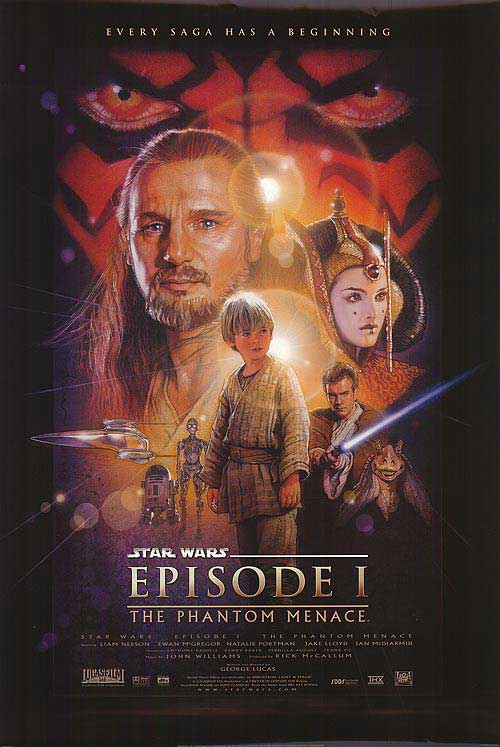
The Star Wars: Episode I script was written by George Lucas.


The Star Wars: Episode I script was written by George Lucas.
Begin with an individual, and before you know it you have created a type; begin with a type, and you find you have created - nothing.
It is my contention that a really great novel is made with a knife and not a pen. A novelist must have the intestinal fortitude to cut out even the most brilliant passage so long as it doesn’t advance the story.
The team over at Scriptshadow has written a helpful article about the old Catch-22 of the screenwriting business: you can’t get an agent without having sold something, and you can’t sell anything without an agent. Scriptshadow offers some thoughtful advice on how to get an agent, but I wanted to focus in one one particular point: you have to be ready.
Scriptshadow writes:
Nobody likes to hear this one, but your writing has to be ready for the big time if you’re going to get a respectable agent (you can shoot for a not-so-respectable agent, but that’s another story). Most writers press for agents too early. I see this ALLLLLL the time. And the writers say to me, “Why am I not getting an agent?” And I say, very respectfully, “I don’t think you’re ready yet.”
read more »
Don’t mistake a good setup for a satisfying conclusion — many beginning writers end their stories when the real story is just ready to begin.
Today’s question comes from Maria:
What should I do if I want someone to read my script? The problem is that I don’t have enough money to enter contests or go to festivals. Btw: I don’t live in LA.
This is a big challenge faced by people trying to break into the screenwriting world, including those writers lucky enough to live in LA. Contests, coverage services, screenwriting books, conferences, festivals… they all come with a price tag. So if you’re on a tight budget, what’s a writer to do?
In order, these are the free or low-cost steps that I would recommend to aspiring screenwriters on a budget:
1. Read Story by Robert McKee and Save the Cat by Blake Snyder, in that order. Buy used copies on Amazon. If that’s too expensive, borrow them from friends. If you don’t have any writer friends, check them out from the library.
2. Read scripts. Thousands of scripts are available to read online for free, including the nice little collection we’ve put together here at LA Screenwriter. Read scripts that are in the genre you’re most interested in. Look at how they’re formatted, how they’re structured, the way they’re written. Do this on a continual basis.
3. Write. It doesn’t cost a thing to write a script. If you can afford it, you should invest in screenwriting software like Final Draft or Movie Magic Screenwriter, but if you don’t have the money for that, there are plenty of free screenwriting applications available online. I put this as number three because you shouldn’t just dive into a script without knowing anything about formatting or structure. If you do that, you’re going to waste a lot of time. Once you know the basics, though, spend the most time on this vital step. Outline, ponder, write, rewrite, and rewrite again. This is how you’ll get to the level at which people will want to read your script.
read more »
I think one of the paradoxes of writing fiction is when people enjoy it, they want it to be real.

Workaholics was created by Blake Anderson, Adam DeVine, Kyle Newacheck, Anders Holm, Dominic Russo, and Connor Pritchard. Here are links to the pilot episode as well as several other episodes from seasons one, two, and three.
The beautiful part of writing is that you don’t have to get it right the first time, unlike, say, a brain surgeon. You can always do it better, find the exact word, the apt phrase, the leaping simile.