How vain it is to sit down to write when you have not stood up to live.
June 15, 2011
Quote of the Day: Henry David Thoreau

June 14, 2011
Quote of the Day: Sinclair Lewis
It is impossible to discourage the real writers - they don’t give a damn what you say, they’re going to write.
June 13, 2011
Script: 7 Scripts Every Writer Should Read
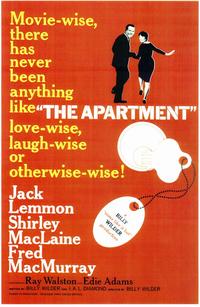
myPDFscripts posted this list of seven scripts that David Lemon, a freshly produced scribe, suggests every writer read. As an added bonus, myPDFscripts included a link to most of the seven scripts which you can download for free off of their website. Take a look:
For me, this is just one of the most touching and beautifully structured scripts ever written. It’s about the loneliness of the big city, the misogyny, putting career before love and a clock puncher finally becoming a ‘mensch’. It’s also a masterclass in dramatic irony and has the second best final line in film history (the number one being ‘Some Like it Hot’).
While I pray it never gets re-made, it could be as its themes are as fresh now as they were then. ‘Genius’ is an overused term but on this film Billy Wilder and I.A.L Diamond had it in spades.
A film I really loved and which really leaps off the page. It’s also inspiring to first time feature writers as Michael Arndt’s CV prior to the film is pretty thin. Now he’s writing ‘Toy Story 3′.
The opening is a brilliant example of setting up a lot of characters with great economy. There’s hardly any dialogue, but five minutes in we already know a lot about this family and their wants and needs.
Like ‘The Apartment’, it’s also a film about something; in this case the American obsession with being a ‘winner’. Paul Dano’s sullen (and largely mute) teenage son even gives a speech just before Olive’s climactic dance in which he tells his uncle (and us) how meaningless other people’s labels of ‘success’ and ‘happiness’ really are. Also worth checking out as the ending in the finished film is ever so slightly different.
A script that’s assembled with Swiss watch precision. There isn’t a single thing that’s set up that isn’t paid off later. It’s also worth comparing with a 1980 draft that’s also floating about on the ‘net.
The essential story- kid goes back in time, has to play matchmaker to his parents- is the same but so much of it feels convoluted and just plain wrong. It makes you realise that films aren’t so much written as re-written. It’s one of the few films I remember with nostalgic affection that’s even better than I remembered it.
4. Aliens
I know- not ‘Alien’? What gives? While I think ‘Alien’ remains a high benchmark for sci-fi horror, there’s just something so compelling about the way James Cameron writes hard-boiled action.
Brilliantly paced, spare dialogue, memorable characters- what more could you possibly want?
M. Night Shyamalan’s recent output may have been, ahem, patchy (have you seen ‘The Lady in the Water’ and ‘The Happening’?) but this really is a terrific script that gives you chills as you read it.
It’s very spare, but every word is well chosen.
6. Sling Blade
Oddly enough, I read this years before seeing the actual film. Both are terrific but on the page, the script really grips you, and the underlying tension of waiting for Billy Bob Thornton’s profoundly disturbed child-man to show his dark side really drives it.
Even on the page your mind’s eye is drawn to him even when he doesn’t seem to be doing anything.
Really exciting to see how this great film looks on the page. Although based on an acclaimed novel, it was screenwriter Simon Beaufoy who came up with the love story which gave his hero a much stronger drive; after all, do you want to see someone succeed because they want to be rich, or because they want to be re-united with the one they love?
It also gave a sense of unity to what could have been a series of interesting but slightly disconnected incidents; great and charming in a book; not so much on screen.
It also manages to incorporate suspense and some pretty traumatic stuff into what critics labelled ‘The Feel-Good Hit of the Year’. While it does leave you on a high, the story takes you to some pretty dark places…
June 13, 2011
Quote of the Day: Ernest Hemingway
The most essential gift for a good writer is a built-in, shockproof shit detector. This is the writer’s radar and all great writers have had it.
June 10, 2011
Writing the R-Rated Comedy
Keith Giglio led a great session at last weekend’s Great American Pitchfest on R-rated comedies. At the top of the session, Keith pointed out that comedies are the easiest sells in Hollywood – they don’t require A-list talent (in fact, they tend to make stars), they’re cheap to shoot, easy to market, and they make a lot of money. As Keith put it, comedies are “the quickest way to Oz.”
At their core, R-comedies are about primal human urges – love, sex, hate, success. R-comedy is the only genre in which “a guy wants to get laid” is a perfectly acceptable hero’s journey (40 Year Old Virgin). Usually in the end R-rated comedies come down to something deeper, but the ending is still always going to be about something innate to human nature, something any audience member should be able to connect to.
As with any kind of film, Keith underscored how important it is to know your genre. If you want to write comedy, study comedy. Study what’s out there now and where the things that are out there now came from. As with most Hollywood films, the trick is to be uniquely familiar with your concept, said Keith. You want to have an idea that sounds like something that has already worked because it has some universal quality to it. But the idea has to have something new to give.
read more »
June 9, 2011
Quote of the Day: Robert Benchley
It took me fifteen years to discover I had no talent for writing, but I couldn’t give it up because by that time I was too famous.
June 8, 2011
Quote of the Day: Uniek Swain
It’s not plagiarism - I’m recycling words, as any good environmentally conscious writer would do.
June 7, 2011
Writing for Television — Lessons Learned at GAPF
Another thought-provoking session from last weekend’s Great American Pitchfest was entitled “Your Career in TV – The View from Both Sides.” The session was essentially a conversation between former Disney executive Kathie Fong Yoneda and Emmy-nominated writer Ellen Sandler.
The session was full of wise advice from both sides of the fence. Here are some highlights:
- Succeeding in Hollywood, whether in film or television, is part magic, but it’s mostly hard work. Something lucky has to happen to you at some point, but when it does, you need to be ready for it, or that lucky break won’t get you anywhere. Take the time to network, perfect your scripts, learn your craft, and eventually, you’ll get there.
- People are looking for you. But they can only find you if you put yourself out there. Join a writing group, go to conferences, go to screenwriting events, volunteer at festivals, submit to contests, and always have your pitch ready to go. The industry can’t find you if you don’t help them out a bit.
- Your odds of finding success in television (and film) go up dramatically the more you write. Being a prolific writer is key.
- You need to be willing to network and to play the game. A good sense of politics is key. For the most part, this simply means being nice to everyone and not asking for favors before you’ve earned the right.
read more »