Writer’s block is a disease for which there is no cure, only respite.
April 25, 2011
Quote of the Day: Terri Guillemets

April 25, 2011
Free Online Master Class: Charlie Kaufman
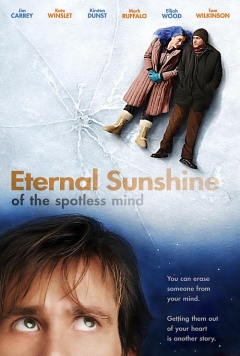
I know he’s not exactly everyone’s cup of tea, but I think Charlie Kaufman is an absolute genius. Eternal Sunshine of the Spotless Mind, Adaptation, Being John Malcovich — all brilliant.
Charlie Kaufman is also the reason why my first three screenplays totally sucked — I wanted to be cool like him and break all the rules. But like any great screenwriter, the reason Charlie is able to break the rules is because he knows what they are.
Check out this awesome 72-minute master class that Charlie gave at the Göteborg Film Festival:
April 22, 2011
Quote of the Day: Graycie Harmon
Being an author is like being in charge of your own personal insane asylum.
April 22, 2011
Recommendation: BeatSheetCentral
*Note: Sites and services that I choose to recommend do not compensate me for my recommendation. These are simply resources that I have found helpful.*
I discovered this site today while looking for articles about how to beat out a script. It’s called beatsheetcentral.com and its simply a collection of user-generated beat sheets for famous movies and television shows.
You can search through the site’s content and try to find beat sheets for films similar to the one you’re trying to pen. Seeing the written structure of a film and trying to pick out for yourself where the inciting incident, the act breaks, the midpoint, the climax, etc. fall can be extremely informative when trying to create a structure for your own story.
Here are a few words from the site’s creator:
A few notes on what I consider a proper beat sheet:
- It should contain every scene of the film, and say fully what happens in each scene.
- It should be concisely written and easily readable.
- Each scene should be its own paragraph, and be numbered for easy reference.
I should make this clear: I do not believe that there is a formula for creating commercially or critically successful films. I believe they come from, in the words of Norman Mailer, “experience filtered through the prism of memory.”
read more »
April 21, 2011
Script: The Social Network
Here’s the Oscar-winning script for The Social Network, penned by Aaron Sorkin. I haven’t had a chance to read this one yet, but Aaron Sorkin is a living legend and a screenwriting hero of mine. Any writer can learn a thing or two from reading Sorkin’s work.
April 21, 2011
Script Writing Basics: The Middle

This blog post from the popular blog Go Into the Story discusses what the second act of your screenplay should achieve. Take a look:
Many writers have trouble with their script’s middle part. Either they get confused and lost to the point where they drop the project out of frustration, or if they do succeed in getting through, the pages come off as a string of episodic events with no coherency to them, no build-up to a big All Is Lost Act Two end.
This is a big reason why I’m such a proponent of the Protagonist metamorphosis arc (Disunity to Unity), a dynamic we see at work in movie after movie. I’ll speak more on that later, but in terms of the story’s middle, let’s consider Deconstruction and Reconstruction.
read more »
April 20, 2011
Using Voice-Over Effectively
This article from the Script Lab on the top ten films to utilize voice-over gives some great insight into how to approach voice-over in your own film. There are times when voice-over should be avoided like the plague and other times when it might be essential to solid storytelling, as this article will illustrate:
In Adaptation, Robert McKee (played by Brian Cox) cries, “God help you if you use voice-over in your work, my friends. God help you. That’s flaccid, sloppy writing. Any idiot can write a voice-over narration to explain the thoughts of a character.”
To a certain extent, he is correct. A lot of films use voice-over to no real effect. They tell you what you already see on the screen. Or they explain something that, with a little bit of brainpower and imagination, you could have worked out for yourself. Or they inform you about something that would have been better off left alone, for the audiences to stew on. But no. Some filmmakers just think we’re idiots and insist that every single bit of information is spoon-fed to us.
“Everything I have written is genius. I don’t want them to miss a single, clever bit of it. But they’re morons, so I’ll shove in some voice-overs to really hammer it on home.” I’m not saying that all filmmakers who use voice-over in this way are that patronizing; most of them probably don’t even realize they’re doing it. It’s just safer for them to assume that we won’t be able to figure it out.
But then there are some screenwriters and filmmakers that’ll use voice-over to compliment the work, and without it, I would argue that the film would not be as good. Their use of voice-over challenges the viewer, in some cases even upset the viewer. Either way, they will expect the viewer to do something with this narration, rather than just mindlessly breathe it in.
read more »
April 20, 2011
The Pros and Cons of Script Coverage Services
This article by Ray Morton is a response to another writer’s attack on script coverage services. Ray raises a number of valid (and thoroughly explained) points about the value of quality script coverage.
My only word of advice on the topic is this: If you’re going to spend the money on a coverage service, be sure to pick one that is well-reviewed and well-respected. A lot of people claim to be able to help you with your script, but not very many actually can. Take the time to do your research before handing over your script and your cash:
A few weeks back, Chad Gervich created quite a stir when he wrote an article for this website advising aspiring screenwriters not to use script coverage services. As I am a professional script analyst who—in addition to assessing scripts for producers, production companies, and screenplay contests—works for a coverage service (ScriptXpert, which is owned by Final Draft, Inc., the company that also owns this website), I had some strong reactions to Chad’s piece. I posted some of them in the article’s comment section, but wanted to offer a more detailed and thoughtful response here.
For those that don’t know, coverage is the name given to the 3-5 page reviews written by script analysts (also known as readers) of the screenplays submitted to their employers (producers, production companies, studios). These reviews assess a script’s strengths and weaknesses in a number of areas (premise, story, characters, dialogue, writing), as well as its suitability for production (a judgment arrived at by considering the quality of each script along with the needs/interest of the production entity—for example, if the producer wants to make a horror film, then a reader obviously wouldn’t recommend a romcom). Coverage is an internal document used by a production entity’s development staff and principals as a guide when deciding whether or not to proceed with a particular screenplay. It is usually confidential and not distributed to the writers of the script or anyone else outside of the production entity.
read more »